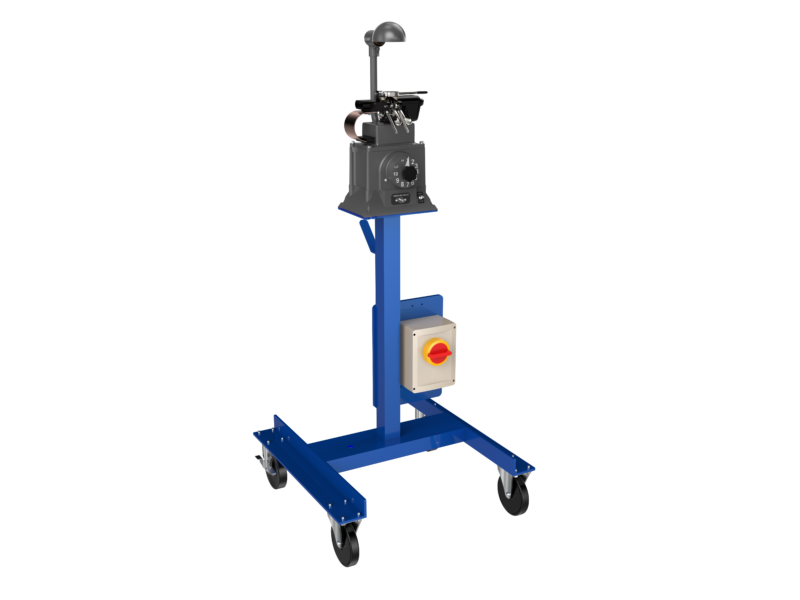
E1S
Stainless Steel, Steel, Titanium
View Product

Built to withstand the rigors of high-volume production, our welding systems offer seamless integration, consistent weld quality, and minimal downtime. From steel wheel components to alloy rims, we provide tailored solutions, complete with expert support, quality parts, and customizable options, to ensure your manufacturing line runs at peak performance. Drive your production forward with tire welding technology trusted by industry leaders.
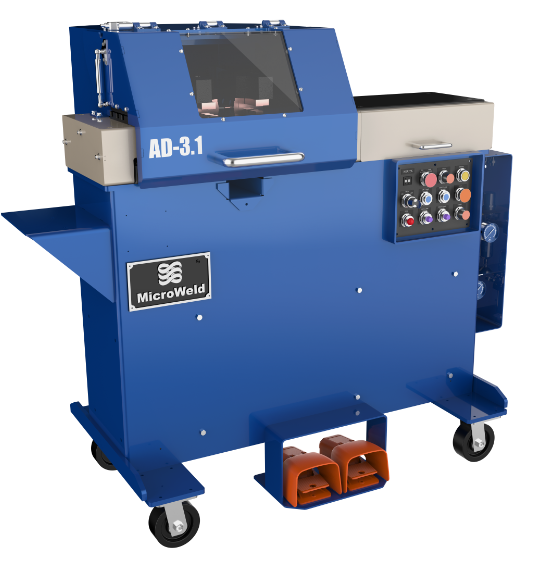
Tire rim welding is used in applications where structural integrity, dimensional accuracy, and repeatable weld quality are critical to safety and downstream assembly. Industrial tire welders are engineered to deliver consistent butt welds that withstand forming, machining, and finishing processes.
Common tire and tire rim welding applications include:
These applications require precise control and repeatability to meet performance and safety requirements in high-volume production.
Tire and rim welding machines are used in manufacturing environments where throughput, consistency, and quality control directly impact finished product performance.
Typical industries and production settings include:
In these environments, tire welders must operate reliably under high cycle counts while maintaining tight tolerances and minimal scrap.
Tire welders are commonly used to weld steel and compatible alloy rim components across a range of diameters and thicknesses.
Properly executed rim welds maintain consistent geometry and alignment, supporting balance and performance in downstream machining and assembly.
Yes. Industrial tire welders are built for high-cycle, high-volume production environments where repeatability and uptime are critical.
Tire rim welding machines can be configured to integrate with forming, rolling, machining, and finishing equipment already in place.
Micro-Weld provides responsive sales and service support, including training, troubleshooting, and process optimization, to help minimize downtime.
Micro-Weld combines nearly 100 years of welding expertise with durable machine design, application-specific configurations, and long-term service support—reducing risk in demanding tire and rim manufacturing environments.
At Micro Weld, we pride ourselves on our dedicated customer care and support team. Our team is always ready to listen to your needs and work in partnership with you to develop the right solution for your team!