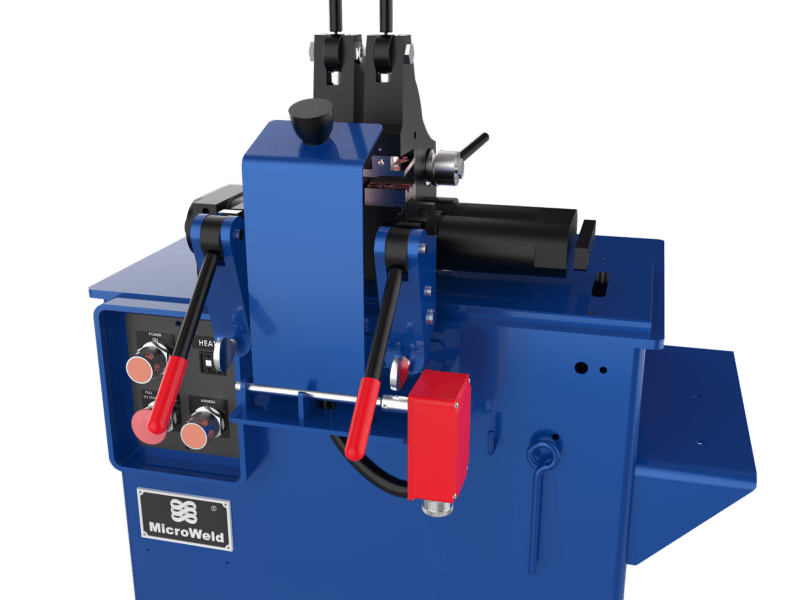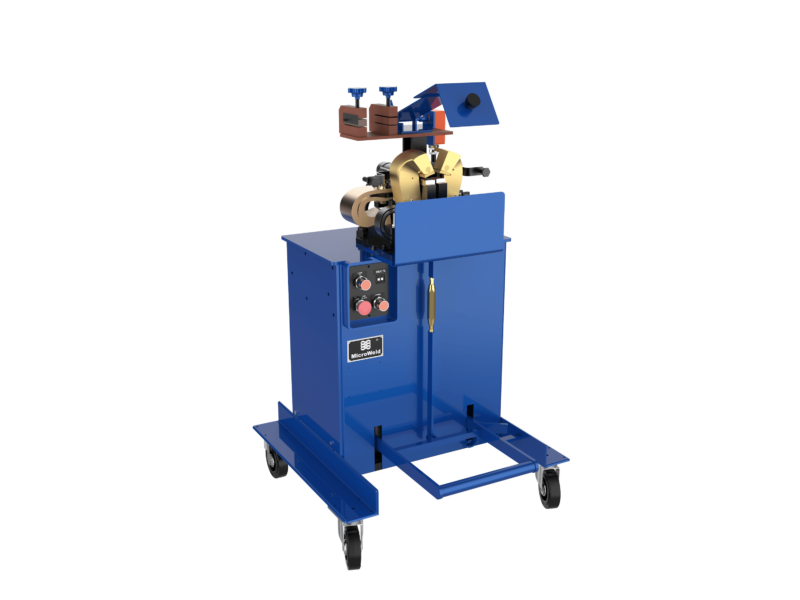
J3S
Stainless Steel, Steel, Titanium
View Product

Engineered for precision, speed, and durability, our welding systems ensure strong, consistent welds across wire and tubular components. We offer complete solutions, including premium components, expert support, and customizable features, to keep your production line running efficiently. Enhance your manufacturing process with proven shopping cart welding machines.
Shopping cart welding is used in production environments where structural strength, dimensional repeatability, and cycle time directly impact product durability and manufacturing cost. Welding machines for shopping cart manufacturers support consistent joining of wire and tubular components used across cart frames, baskets, and subassemblies.
Common shopping cart welding applications include:
These applications require stable fixturing and repeatable process control to maintain cart geometry and minimize rework.
Shopping cart welding machines are used in manufacturing environments where high throughput and consistent quality are required to meet volume and durability expectations.
Typical industries and production settings include:
In these environments, welding equipment must deliver reliable performance under high cycle counts while supporting consistent fit-up and finished assembly quality.
Shopping cart welding commonly includes wire basket assemblies, child seat components, tubular frames, handles, and other structural subassemblies.
Yes. Welding machines used by shopping cart manufacturers are designed for high-cycle environments where repeatability, speed, and uptime are essential.
Consistent weld integrity and repeatable geometry help carts maintain strength under load, improve long-term durability, and reduce warranty issues.
Yes. Systems can be configured with application-specific tooling and flexible setups to support wire and tube cart components within the same manufacturing environment.
Micro-Weld provides training, technical support, and service to help maintain stable production, reduce downtime, and support process optimization.
Micro-Weld combines nearly 100 years of welding expertise with durable machine design, application-specific configurations, and long-term service support to reduce risk for shopping cart manufacturers.
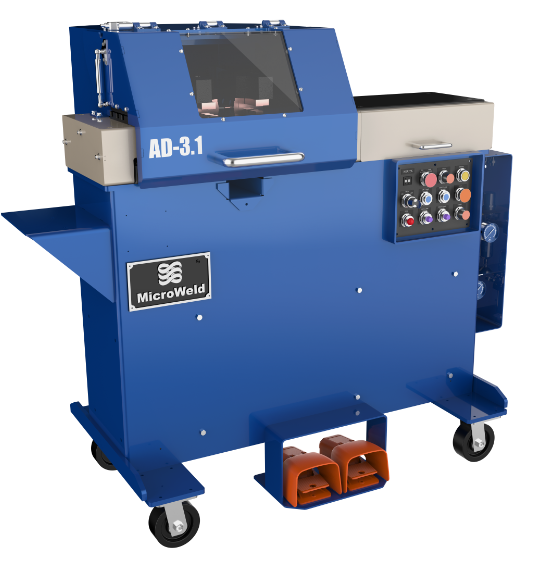
At Micro Weld, we pride ourselves on our dedicated customer care and support team. Our team is always ready to listen to your needs and work in partnership with you to develop the right solution for your team!