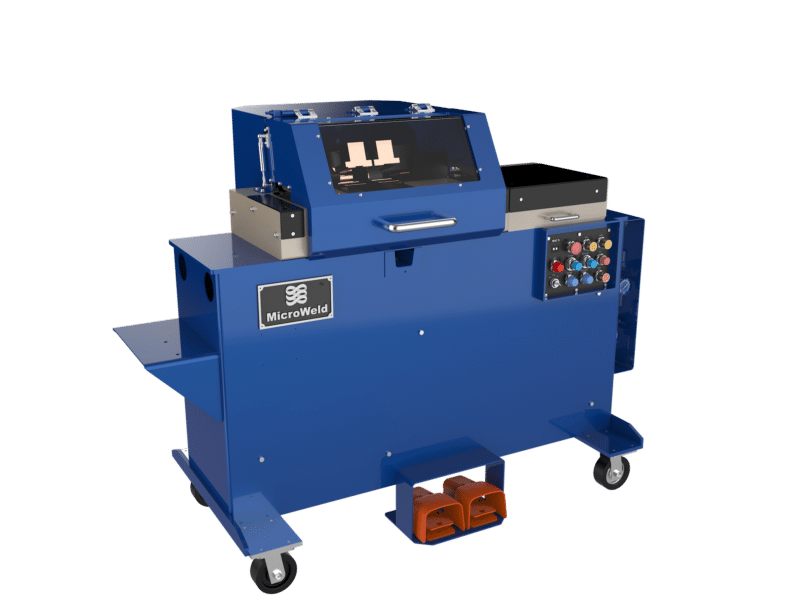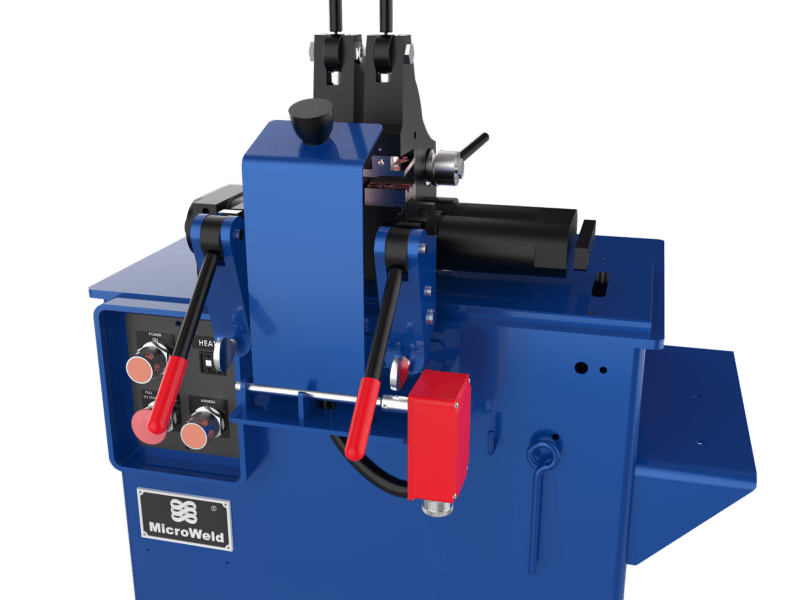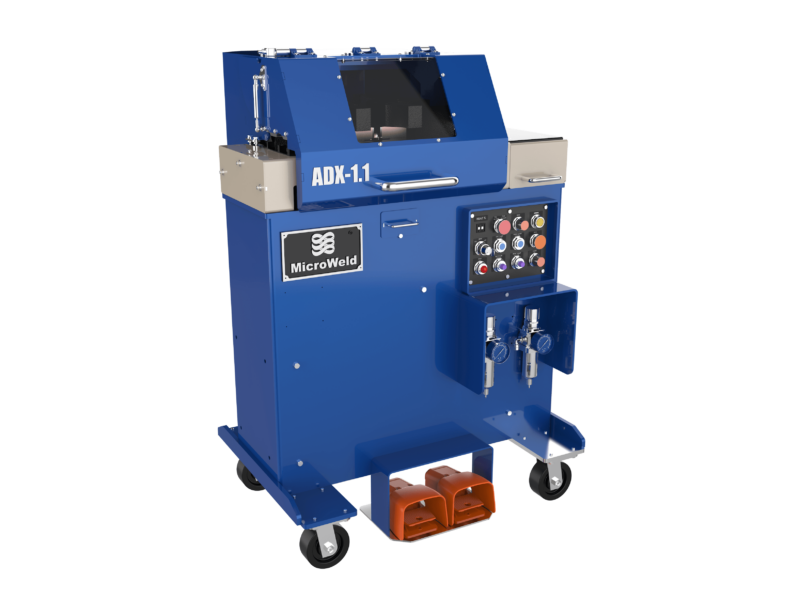
ADX-1.1
Stainless Steel, Steel, Titanium
View Product

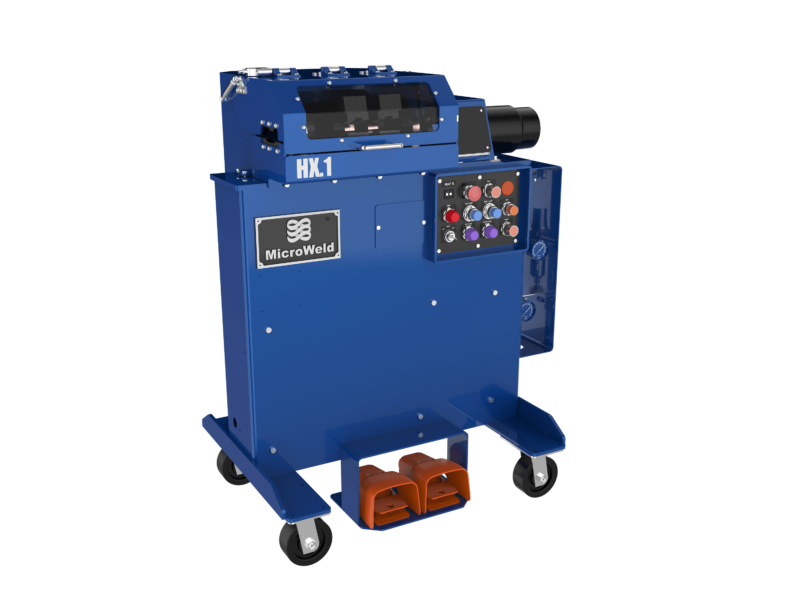
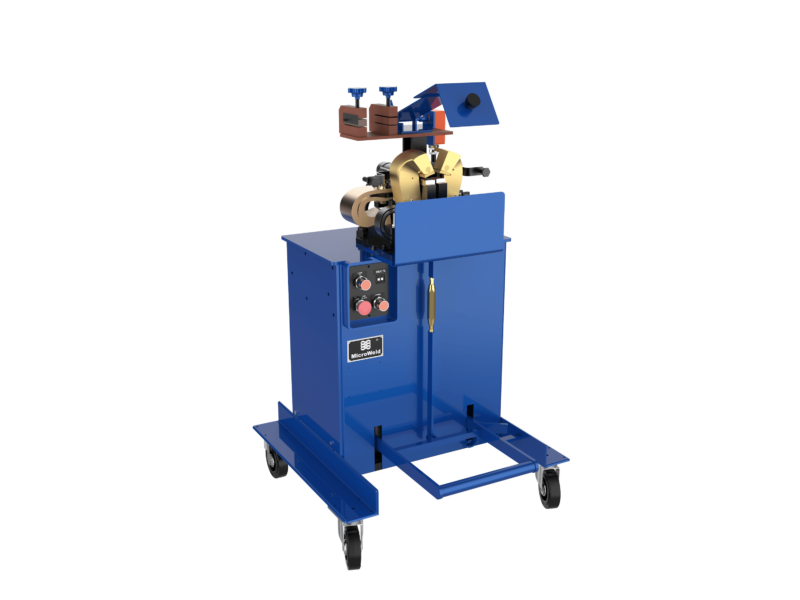
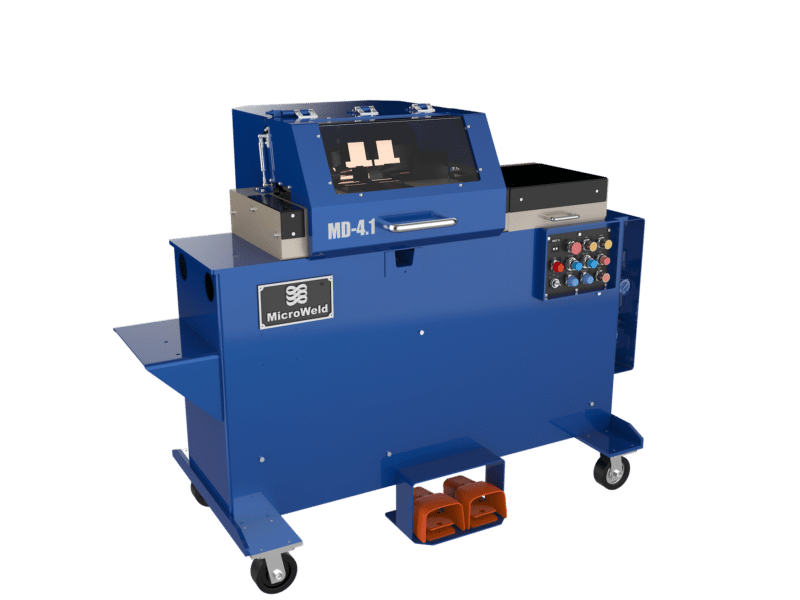
Engineered for precision, durability, and speed, our welding systems deliver strong, reliable welds for a wide range of spring types, from compression and extension to torsion and specialty designs. We offer a full suite of solutions including high-quality components, expert support, and customizable features to optimize your production. Elevate your spring manufacturing process with Micro Weld’s proven welding technology.
Spring welding is used in production environments where material consistency, joint strength, and downstream forming compatibility are critical. Butt welding machines support spring manufacturers by creating repeatable end-to-end joints in spring wire and spring steel materials that must perform reliably under cyclic loading.
Common spring welding applications include:
These applications require predictable weld geometry and stable process control to avoid failures during coiling and to support consistent spring characteristics.
Spring welding machines are used in manufacturing environments where repeatability, throughput, and quality control directly affect spring performance and production efficiency.
Typical industries and production settings include:
In these environments, spring steel welding equipment must support high-cycle production while maintaining consistent results across long runs.
Yes. Butt welding machines designed for spring manufacturing provide controlled heat and pressure to produce repeatable joints in spring wire and spring steel materials.
Consistent weld alignment and geometry help welded material feed smoothly through coiling equipment, reducing disruptions and supporting consistent spring characteristics.
In spring manufacturing, the focus is less on manual technique and more on repeatable process control, including heat input, upset consistency, and alignment to maintain material performance.
Yes. Spring welding systems are built for high-volume environments where uptime and repeatability are critical to meeting production targets.
Spring welding machines can be configured to integrate with existing payoff, straightening, and coiling equipment to support continuous operation.
Micro-Weld combines nearly 100 years of welding expertise with durable equipment design, application-specific configurations, and long-term service support to reduce risk for spring manufacturers.
At Micro Weld, we pride ourselves on our dedicated customer care and support team. Our team is always ready to listen to your needs and work in partnership with you to develop the right solution for your team!