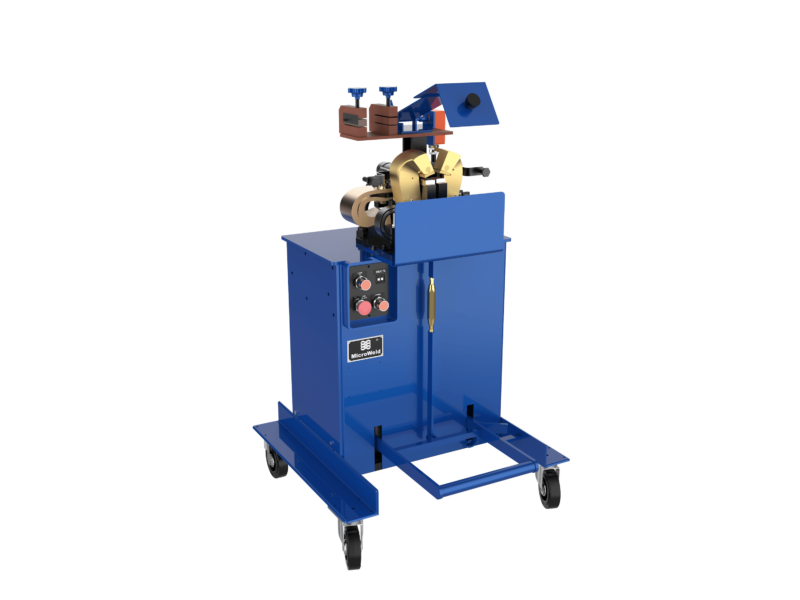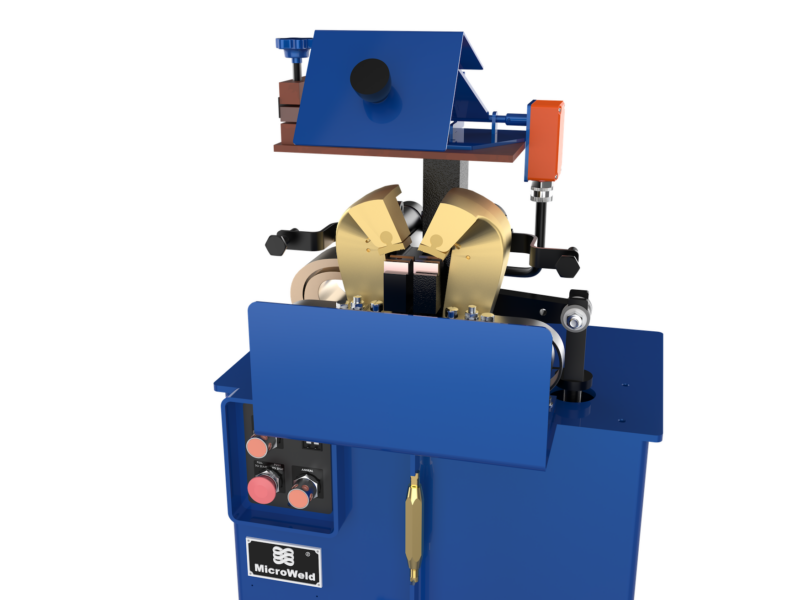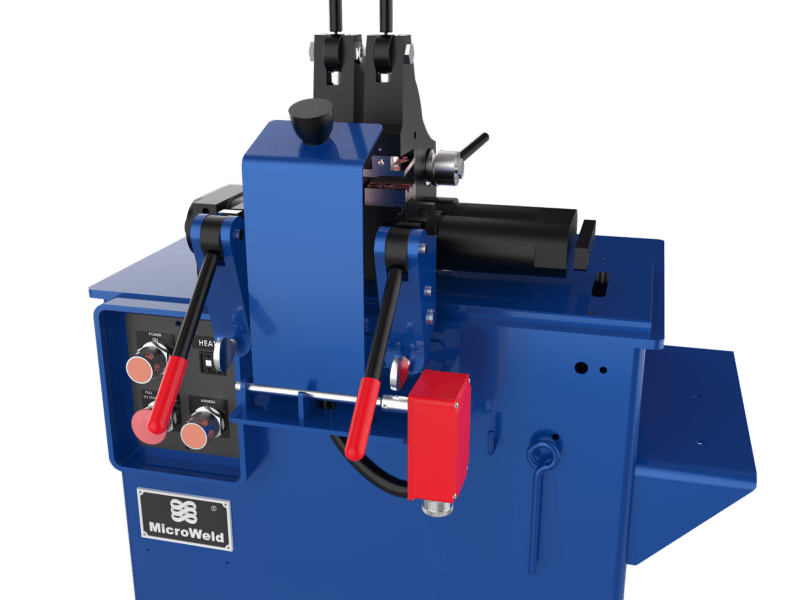
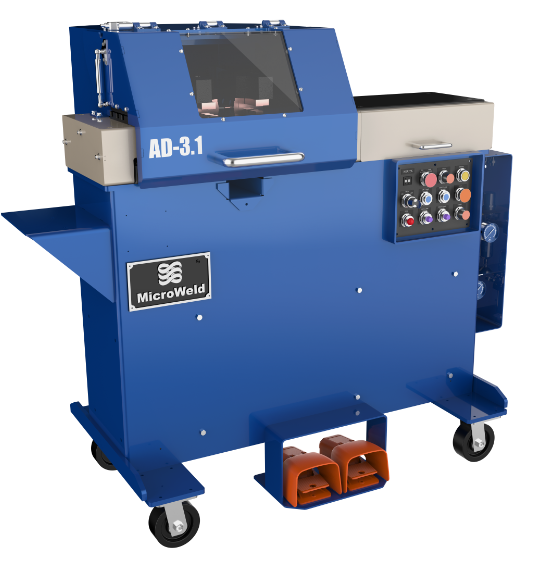
GT Fine-to-Mid Range Solid Steel Butt Welder for Ferrous Wire Production
Stainless Steel, Steel, Titanium
View Product

Built for repeatability, control, and high throughput, our welding systems deliver clean, reliable welds for a wide range of wire forms, including brackets, racks, baskets, springs, and custom-shaped components. We offer a full suite of solutions, including specialized tooling, process optimization support, and flexible configurations, to help you streamline production and improve weld consistency. Trust Micro Weld to elevate your wire form manufacturing with proven performance and precision.
Welded wire forms are produced in environments where dimensional accuracy, repeatable joints, and consistent fit-up are critical to downstream assembly and finished part performance. Wire form welding machines support controlled joining of wire and formed components used across a wide range of products and industries.
Common wire form welding applications include:
These applications require stable clamping, consistent heat input, and repeatable weld geometry to keep formed parts within tolerance.
Wire form welding equipment is used in manufacturing environments where high throughput and repeatability are essential, and where multiple metals may be processed depending on product requirements.
Typical industries and production settings include:
In these environments, welding wire machinery must support consistent results across long runs and changing production requirements.
Wire form welding machines support welding for brackets, racks, baskets, trays, frames, hooks, clips, and other welded wire forms used in industrial and commercial products.
Yes. Wire form welding equipment can be configured based on material type and size range, supporting common wire form materials including stainless steel, carbon steel, and brass alloys.
Repeatable weld geometry and alignment help welded wire feed consistently through forming equipment and improve fit-up in fixtures, reducing rework and scrap.
Yes. Systems can be configured with application-specific tooling and integration-ready layouts to support existing upstream wire handling and downstream assembly processes.
Micro-Weld provides application support, including tooling guidance, training, and process optimization to help stabilize weld quality and improve throughput.
Micro-Weld combines nearly 100 years of welding expertise with durable machine design, specialized tooling support, and long-term service to reduce risk and improve consistency in wire form production.
At Micro Weld, we pride ourselves on our dedicated customer care and support team. Our team is always ready to listen to your needs and work in partnership with you to develop the right solution for your team!