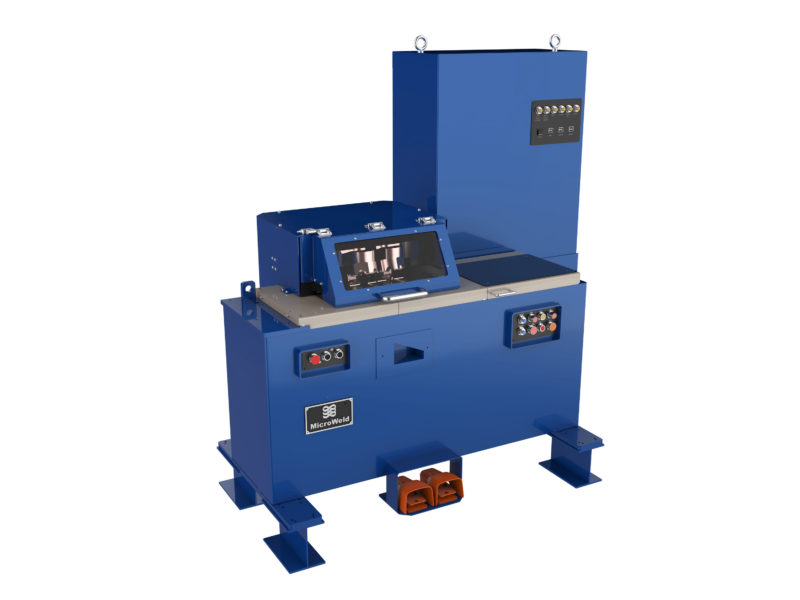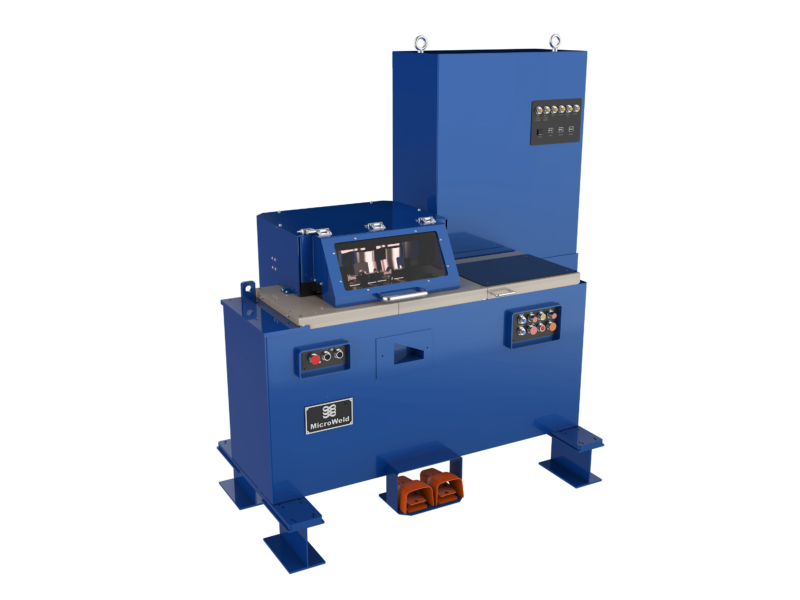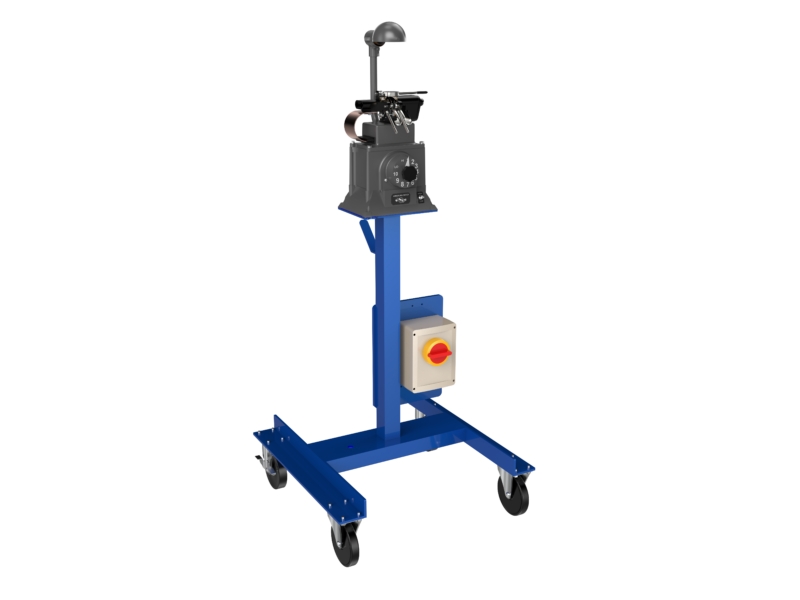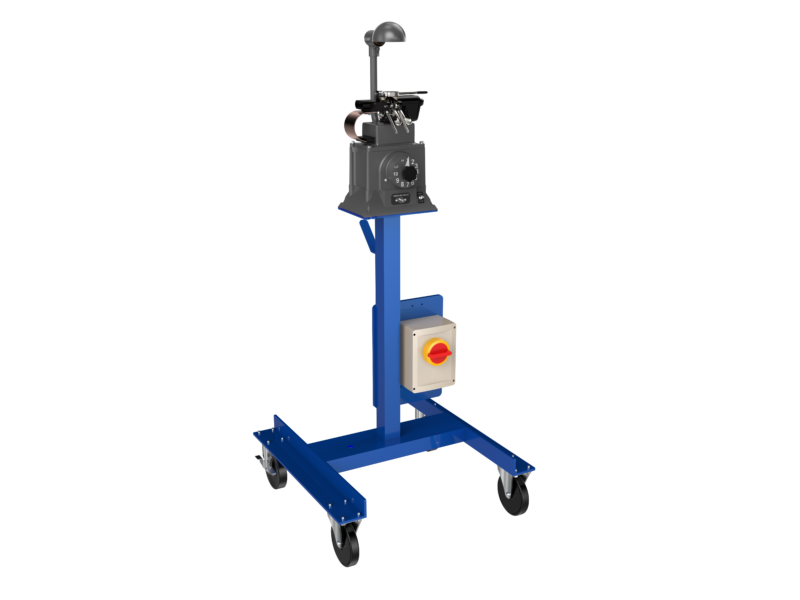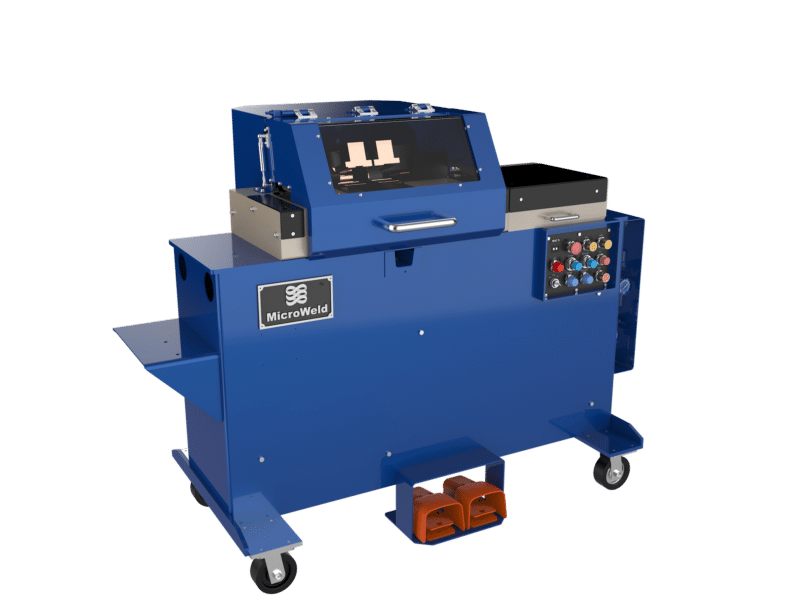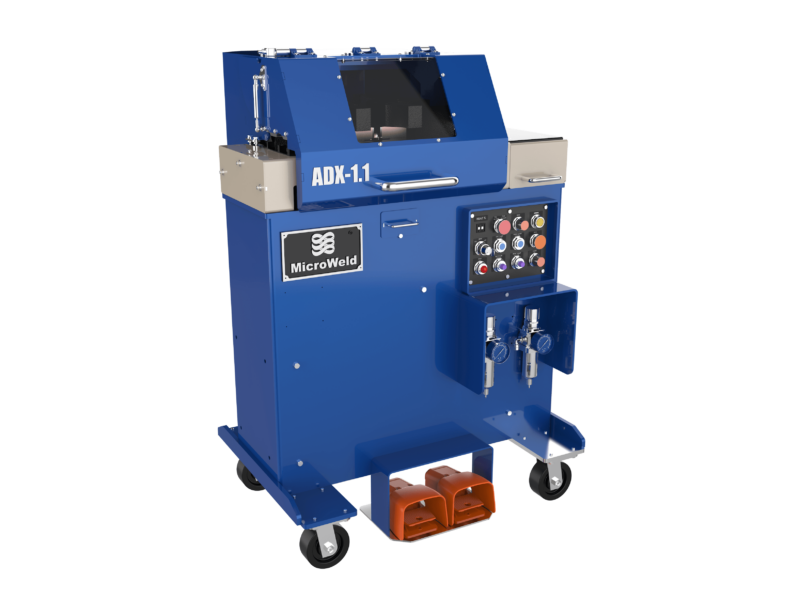
ADX-1.1
Stainless Steel, Steel, Titanium
View Product

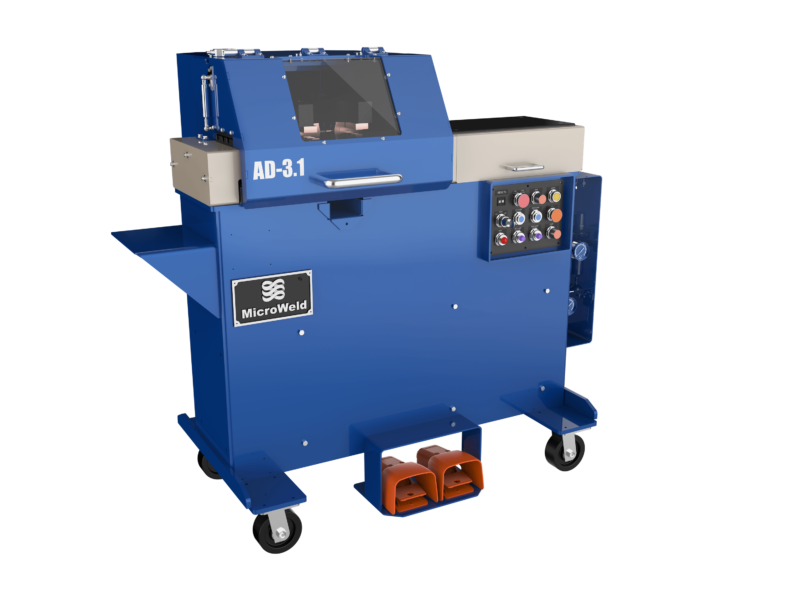
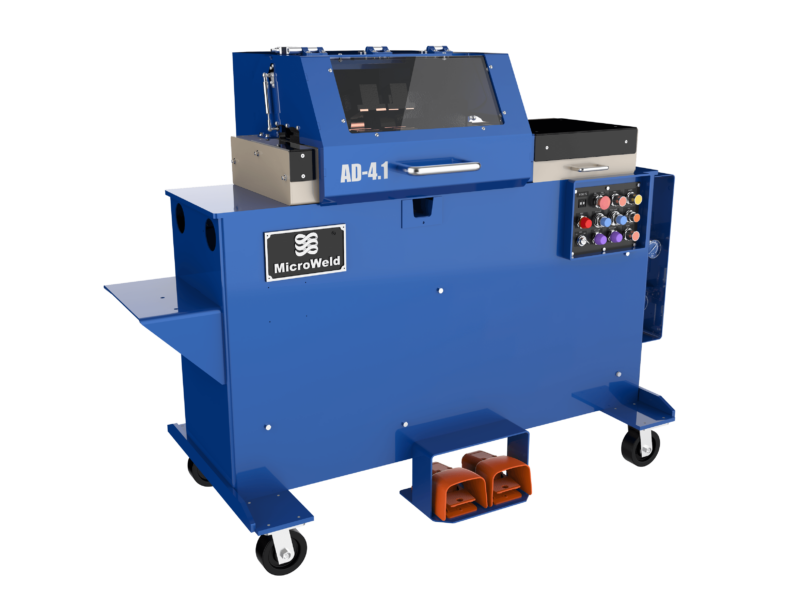
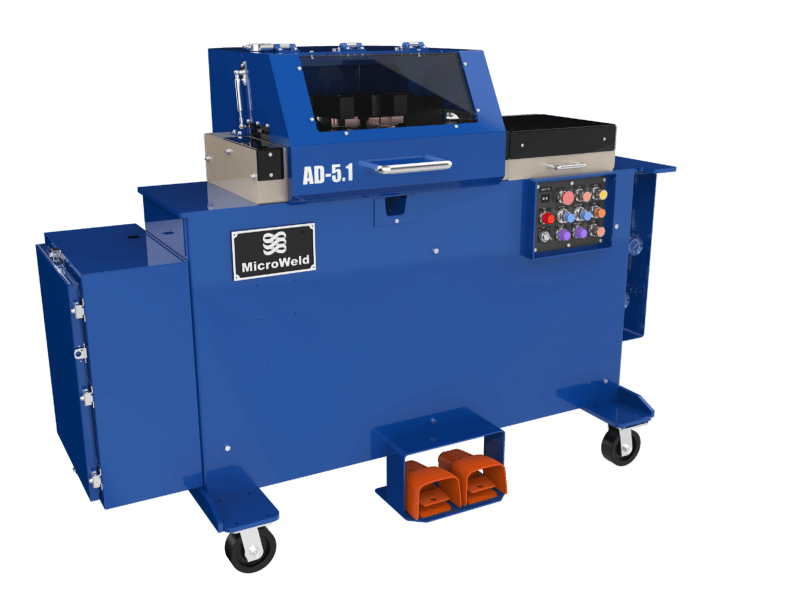
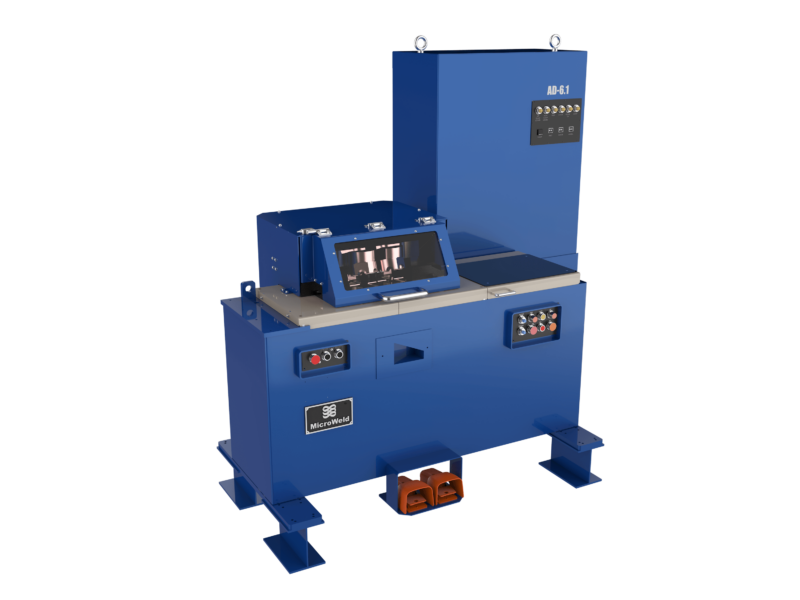
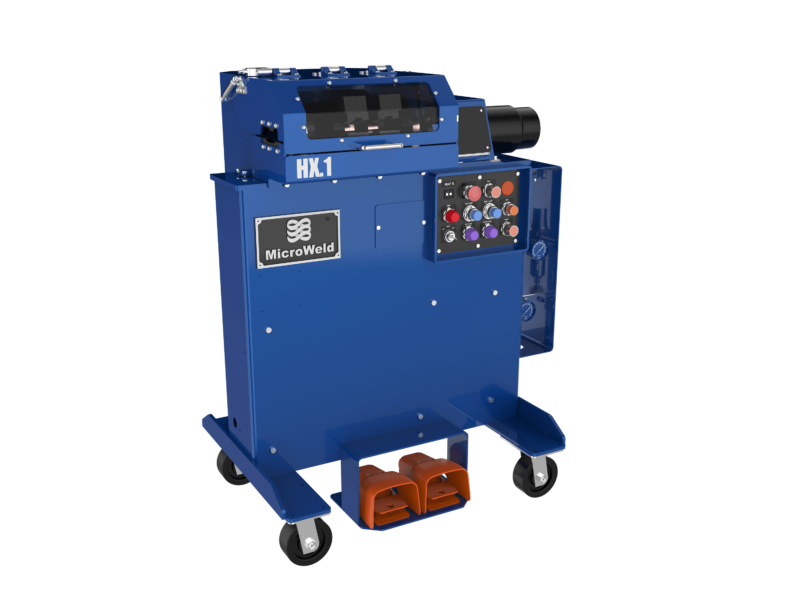
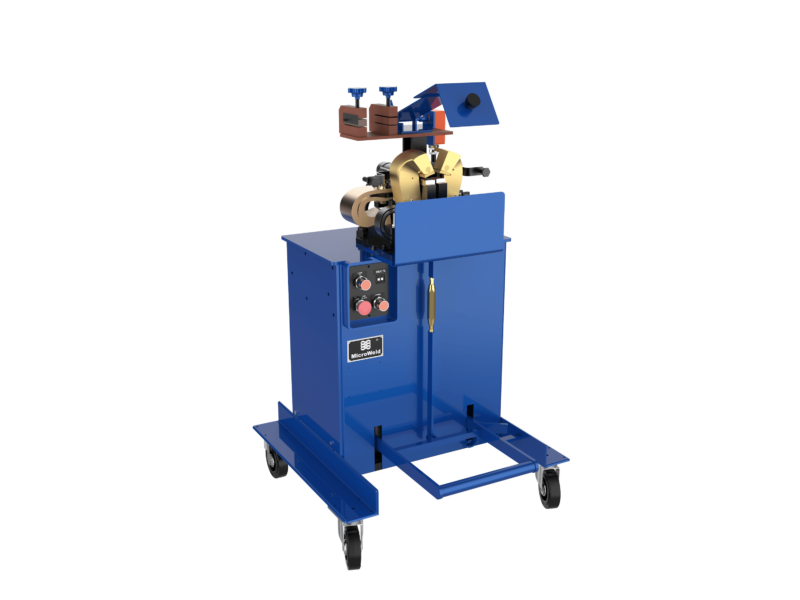
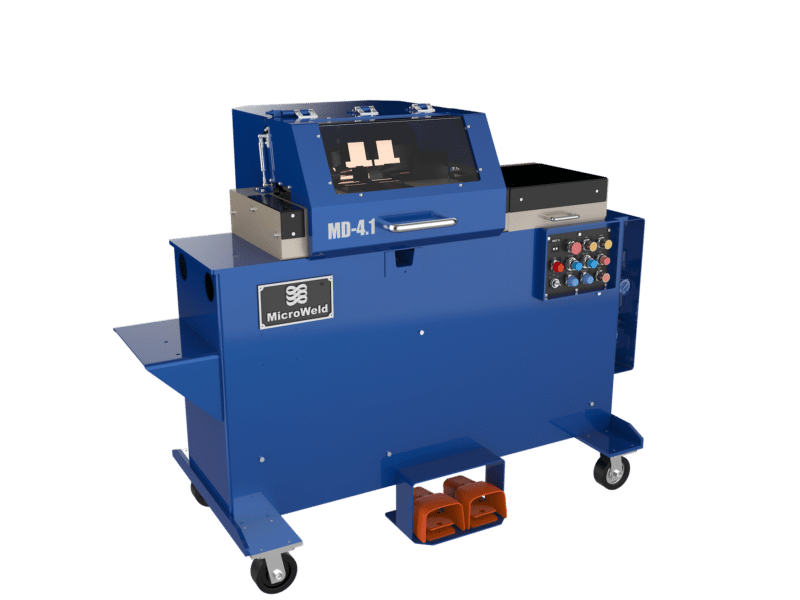
Micro Weld’s solid-state welding systems come with durable construction, application-specific tooling, and integration-ready configurations. We offer complete support, including operator training and process optimization, to help you streamline production and achieve unmatched weld quality. Trust Micro Weld to deliver precision, reliability, and control where it matters most.
Solid wire construction is ideal for applications requiring maximum joint strength, consistent cross-section, and predictable downstream performance. Solid wire welders create strong, precise connections for single-strand wires used in industrial, electrical, and manufacturing applications. Because the material is uniform and non-stranded, heat input and upset can be tightly controlled, resulting in repeatable weld geometry and minimal variation. This construction type is best suited for high-cycle production lines where consistency, dimensional stability, and reliable forming or drawing performance are critical.
Solid-state resistance welding is used in applications where precise heat control, repeatability, and process stability are critical. Solid-state welders replace traditional mechanical or analog control with digitally regulated power delivery, enabling tighter control over weld parameters.
Common solid-state welding applications include:
These applications benefit from stable power delivery and fine-tuned control over the welding cycle to support downstream processing and quality requirements.
Micro-Weld solid-state resistance welders are used in manufacturing environments where process control and uptime directly impact throughput and product consistency.
Typical industries and production settings include:
In these environments, solid-state welding systems help reduce variability, improve repeatability, and support long-term production stability.
Solid-state welders provide digitally controlled power delivery, offering more precise and repeatable weld parameters than mechanical or analog systems.
Yes. Solid-state resistance welders are well suited for high-cycle production environments where consistent weld quality and uptime are critical.
Solid-state welding machines can be configured to integrate with existing line equipment, tooling, and automation, depending on application requirements.
Yes. Solid-state control allows for fine adjustment of welding parameters, making it easier to optimize processes for specific materials and production conditions.
Micro-Weld provides training, technical support, and service to help ensure solid-state welding machines perform reliably over their service life.
Micro-Weld combines solid-state welding technology with application expertise, responsive support, and long-term service—helping manufacturers reduce risk and maintain consistent production performance.
At Micro Weld, we pride ourselves on our dedicated customer care and support team. Our team is always ready to listen to your needs and work in partnership with you to develop the right solution for your team!